From Vault to Virtual: A Journey Through Banking's Past, Present, and Future. Banking has evolved dramatically with technology, changing customer expectations. Pre-1980, bankers were revered, and customers adapted to their rules, even waiting for withdrawals. Today, even minor delays lead to complaints. This blog explores banking's new opportunities, trends, investment strategies, and industry insights. New concepts, value creation in operations and research papers will be shared in this blog

Showing posts with label Tips. Show all posts

Sunday, November 12, 2023

What to expect in low interest environment and how to manage risk.


We are inevitably heading towards a low-interest environment. There are opportunities as well as certain risks in a low-interest environment. The ability to borrow at lower rates will increase money circulation and spur economic activities. Investors will look at alternative investments as interest earnings from their investments start to fall. If you know the characteristics of the low-interest rate environment you can manage the risk while earning high returns from the investments. The investment portfolio should be adjusted regularly according to the market conditions to grow the portfolio.

 If you know how to play smart you can steer through the low-interest environment by maximizing the returns. Here are some key points to consider before you invest or borrow in a low-interest environment.

·        Mushrooming of pyramid schemes.
·        There is a high tendency to obtain loans for consumption by individuals.
·        The revenue of companies will improve.
·        Banks will focus more on fee income-generating activities.
·        The low spending power of senior citizens.
·        Investors shift money from fixed income to stocks.
·        People will invest more in real assets.


Mushrooming of pyramid schemes.

People who get used to receiving high-interest income from their fixed-income investments will be encouraged to take excessive risks in a low-interest environment. Scammers might introduce bogus investment plans and pyramid schemes targeting vulnerable investors who look for high returns. People with low financial literacy and investors who only look at high returns can be the victims of such schemes in low-interest environments. Returns correlate with risk. Do not forget that high return comes with a high risk.


There is a high tendency to obtain loans for consumption by individuals.

When borrowing cost is low, people will borrow more for consumption or to upgrade their living standards. This will reduce the disposable income of the borrowers. As per the interest rate cycle, interest rate fluctuates over time as market interest rates change. When interest rates shift from a low to high-interest rates environment, lending rates will start to rise. Repricing of lending rates will further reduce the disposable income of people who have borrowed more for consumption.  This can hurt the ability to spend.  

The revenue of companies will improve.

Companies are borrowing money to fund their day-to-day operations. Interest cost represents the higher portion of their total operation cost. When interest rates fall, it becomes more cheaper for companies to borrow. Lowering cost will improve their income margins and fuels the growth. As consumers borrow more at lower rates and spend more for consumption can expect revenue growth. As a result, companies will have high profits which will move the stock price up.


Banks will focus more on fee income-generating activities.

As margins become thinner interest generating activities will no longer give desired profits for banks. Banks will have to look for more fee-generating activities to bridge the gap. The funding mix will change by reducing short-term borrowings and mobilizing more deposits to fund themselves. An increase in loan portfolio with high-quality assets will reduce the NPL ratio. If banks can generate more fee income and grow quality asset portfolios in a low-interest rate environment, they can improve their profit margins.


The low spending power of senior citizens.

Senior citizens are highly dependent on interest income and lowering their monthly interest income will reduce their spending power. Senior citizens might get attracted to risky investments that offer high returns. The larger portion of their expenses is for medicines. Due to a reduction in interest income, they might shift from high-quality drugs to low-quality drugs, which are available at a lower price. Seniors depend on fixed-income instruments for stability and income. They have limited options to invest and might not consider options like unit trusts, equity investments, or investing in commodities which expose them to more risk. Building up a long-term investment portfolio in a low-interest environment may not be practical as returns of the investments might not cover the expenses over time.


Investors shift money from fixed income to stocks.

Bonds and interest rates have an inverse relationship. Whereas interest rates fall, bond prices rise. In a low-interest environment share market performs better as many investors reduce the allocation to fixed-income instruments and invest in stocks to get high returns. This will intern make the share market more active and likely to generate high returns on stocks. If your portfolio has high exposure to stocks, it might put your portfolio over the risk level. It is important to know that having fixed-income instruments in the portfolio gives portfolio stability and it is always better to have a balance in the portfolio.


People will invest more in real assets.

When mortgage loan interest rates fall, people will start borrowing and investing in lands and properties. Lands and property prices will move up due to high demand. This is a good opportunity for investors to invest in land and properties before prices move up. Real assets are not only lands and properties, they include other tangible assets such as commodities, precious metals, equipment, natural resources, etc. You can diversify your portfolio by investing in real assets and hedging against inflation. Real assets have the potential to produce an additional income as well.


Conclusion

A risk-averse investor may allocate more to fixed-income instruments to maintain a stable portfolio. Investors with a high-risk appetite may increase exposure to risky assets to gain high returns.

Borrowing and investing in real assets is a risky proposition. Knowledgeable investors can borrow at low rates and invest in high-yielding assets.

It is important to assess your risk tolerance level, expected return, ability to take losses, and current and future market conditions before making the investment decision. Some strategies can help you to maximize returns while mitigating risk in any market condition. Knowing the right strategy will help you to play smart in a low-interest environment.


Wednesday, November 8, 2023

How to evaluate and reward employees based on their efforts

A lesson from the ICC World Cup match between Australia Vs Afghanistan.


Glenn Maxwell played a match of the year. His unbeaten double century led Australia to defeat Afghanistan by 3 wickets in the ongoing ICC World Cup match at Mumbai'sgg Wankhede Stadium. He scored 201 from just 128 balls. Undoubtedly his contribution should be recognized and rewarded. How about the inning played by Pat Cummins? He scored only 12 runs from 68 balls and protected his wicket until the winning run. Cummins's inning was as good as the inning of Glenn Maxwell. Cummins has played equally well and has paved the way for Maxwell to score runs and win the match.


In our organizations we have employees performing exceptionally well and their performance is measured based on the numbers. Other employees in our organizations are working hard to lay the platform for others to perform or make the team members shine. For example, there can be employees who have achieved 150% of their target. To achieve this, employees of the Product Development unit would have put lots of effort into developing the right product, employees of the marketing division would have put lots of effort in choosing the right campaign, employees of the operations unit would have worked hard in continuously improve the internal processes, staff of HR would have put efforts in having the right people at right place. However, their efforts cannot be evaluated based on numbers. We should have an effective mechanism to recognize their efforts, which links to the performance of other employees.


Cummins clearly understood the role that he must play and led Australia to defeat Afghanistan. If Cummins got out early, Australia would have been in deep trouble. Hence organizations should protect the employees who put efforts into laying a platform for others to perform and should not let them get out early. If they get out early, it can hurt the performance of the organization.


Thursday, November 2, 2023

How to Forecast Market Interest Rates Using Time Series & Neural Network Models In Data Science

 Forecasting Market Interest Rates Using Time Series & Neural Network Models In Data Science


Introduction

Market interest rates play a vital role in our economy. Interest rates will have a direct impact on money circulation and the economic activities in the country. By having an informed prediction of the movement of interest rates, markets can pre-emptively adapt to changing conditions. Forecasting of lending interest rate is a challenging task. Lending interest rates are influenced by many external and internal factors. This project intends to develop a predictive model that can forecast the Average Weighted Prime Lending Rate (AWPLR) based on historical data and relevant economic indicators. 

Dependent variable selection

The AWPR is calculated by the Central Bank of Sri Lanka (CBSL) weekly, based on commercial bank's lending rates offered to their prime customers during a particular week. A monthly average of weekly AWPLR is also published. AWPLR has a direct impact on market interest rates since banks’ lending rates for corporates and individuals are mainly decided by the  AWPLR.

Independent variables selection

AWPLR rates fluctuate due to many factors and have selected only the main factors, that can have a direct impact on AWPLR. 

  1. TbRate - Weekly 364 days Treasury bill rate

  2. Inflation - Headline Inflation (Y-O-Y)

  3. SDFR - Standing Deposit Facility Rate

SDFR provides the floor rate for absorbing overnight excess liquidity from the banking system by the Central Bank.

  1. SLFR - Standing Lending Facility Rate

The interest rate applicable on reverse repurchase transactions of the Central Bank with Commercial banks on an overnight basis under the Standing Facility provides the ceiling rate for the injection of overnight liquidity to the banking system by the central bank.

  1. AWFDR - Average Weighted Fixed Deposit Rate

A rate computed monthly based on all deposit rates of commercial banks, weighted by the outstanding deposit balances at the end of each month.

  1. BankRate -  Bank Rate

The rate at which the Central Bank grants advances to commercial banks for their temporary liquidity purposes.

  1. USDLKRrate - Indicative Rate of the USD/LKR Exchange Rate 


Prediction Models

Two major models have been used for forecasting of average weighted prime lending rate.

1. Time series models

2. Neural Network models

Data

Retrieved all the data for the project from the website of the Central Bank of Sri Lanka (www.cbsl.com), which is a platform holding statistical data for various interest rate-related data. Weekly figures (from 03.01.2020 to 26.05.2023) have been gathered to train the models. The dataset used was downloaded as Excel files, and then it was filtered and rearranged for training as well as testing purposes.

Model development

Both Time series models and Neural Network models have been used to analyze and interpret datasets. The intention of using two models for forecasting was to compare and see the accuracy level of each model for forecasting.


 Time Series Analysis

Time series analysis is a technique in statistics that deals with time series data and trend analysis. 

Implementation Process and Execution

Below are the imported libraries and packages needed for building the time series model.

Packages 

tseries is a package developed by R CRAN. Use for time series data analysis. Can create time series 

objects by using the ts() function by organizing the data such as frequency, starting year ending year, are this quarterly 

data, monthly data, weekly data, etc. lubridate() package required for decimal dates. Since this is a weekly data there is a decimal number of weeks (365.25/7). 

Fpp package required for forecasting.


Plotting of time series 

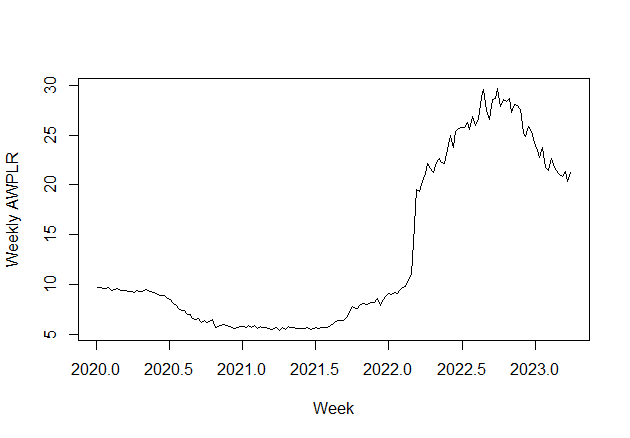
The series doesn’t show any clear trend component. There is an unusual hike between 2022.5 & 2023. We can consider that as an outlier. To get a clear idea about the series we need to plot ACF & PACF. 


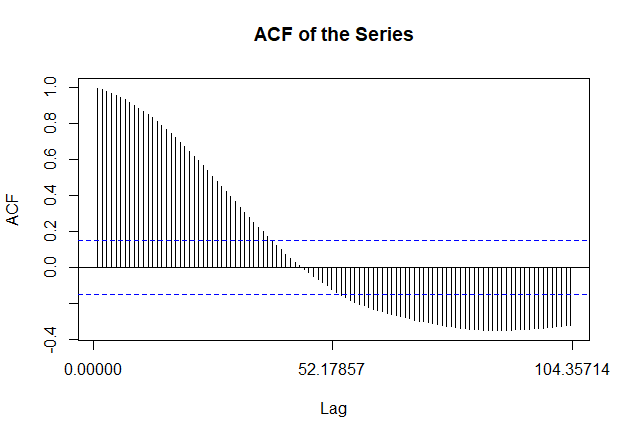
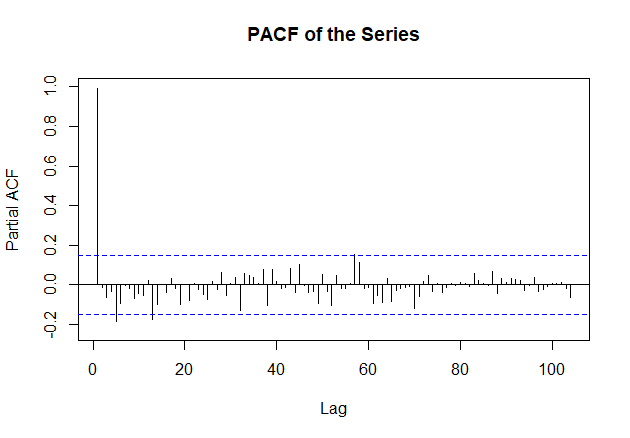
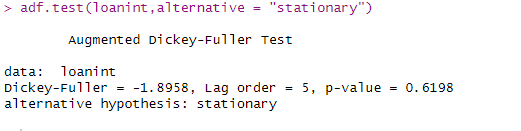
ACF function gives MA(q) & PACF function gives AR(p). According to ACF series seems to be nonstationary.  Applied ADF to see whether it is stationary or not.


Since P value is > 0.05 we can’t reject the null hypothesis, which is series is not stationary. Since series is not stationary, we can apply a differencing transformation technique to make it stationary. ndiffs function can be used to identify the number of differences

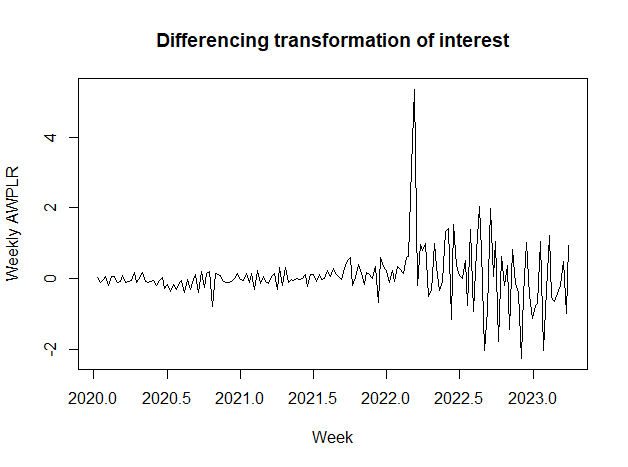
Plotting of differencing transformation of interest


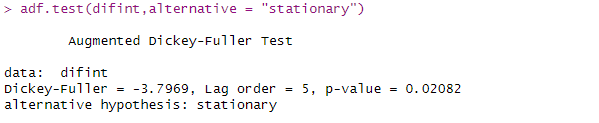
Adf test after differencing

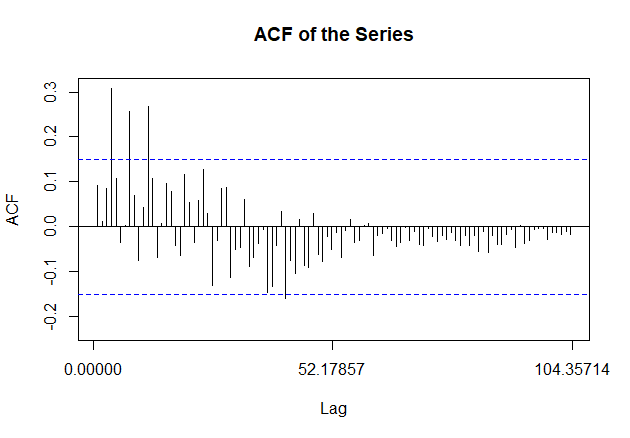
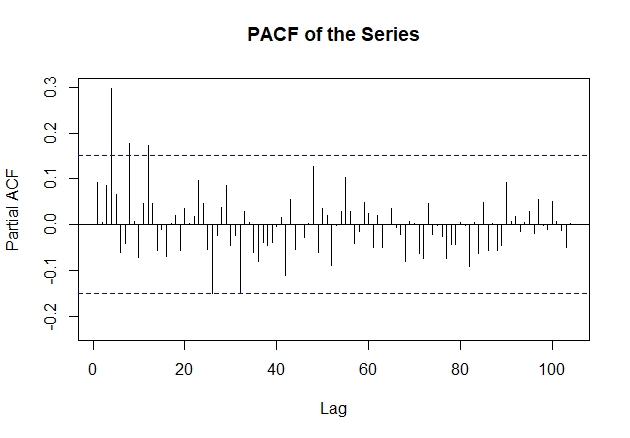
since p value <0.05, series is stationary. ACF & PACF plots after differencing.


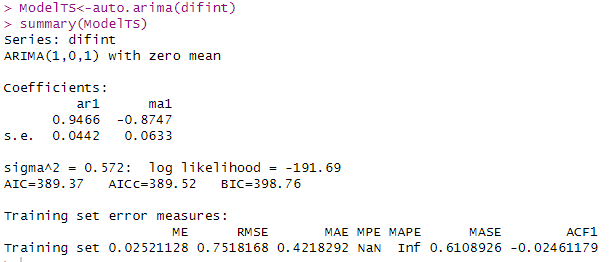
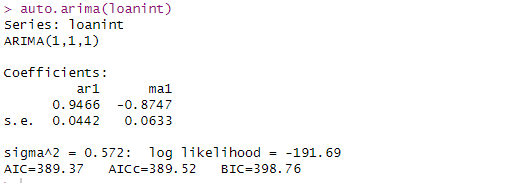
Use of AUTO ARIMA function to the original dataset (loanint) & the differencing dataset (difint) to identify the best forecasting model. A model with the lowest AIC can be considered the best fit.

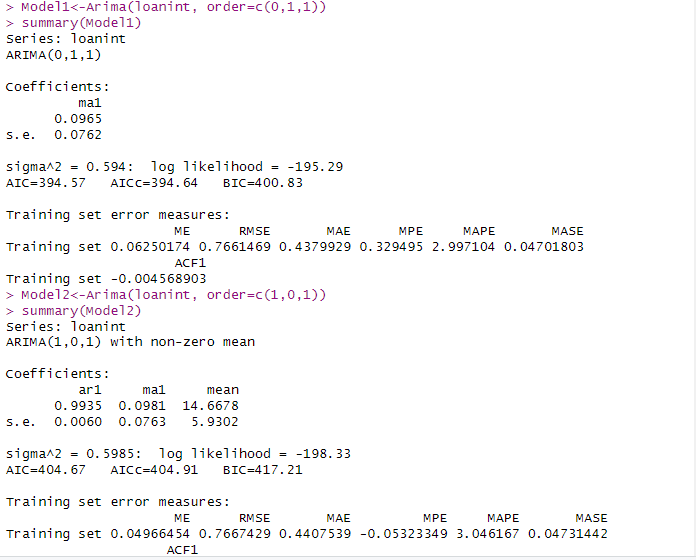
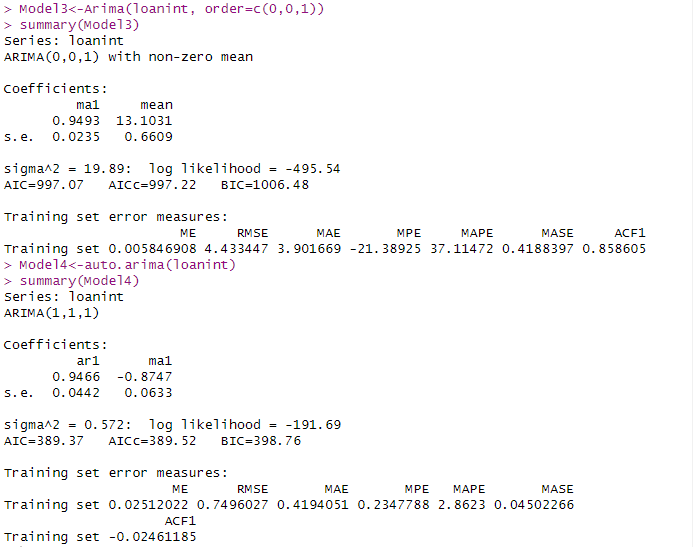
Since both the models are closely matched, the ARIMA for neighboring models to identify the best model.

It shows that Model4 is the best fit.

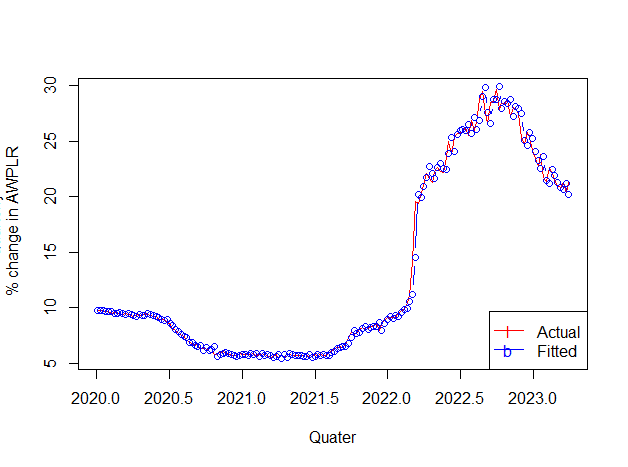
Comparing the fitted values with actuals. 


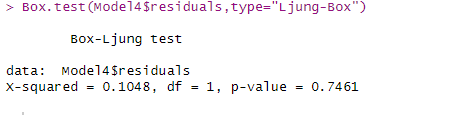
Box.test(Model4$residuals,type="Ljung-Box")

# H0: The residuals are independently distributed.

HA: The residuals are not independently distributed;

P-value of the test is 0.7461, which is much larger than 0.05. Thus, we fail to reject the null hypothesis of the test and conclude that the data values are independent.


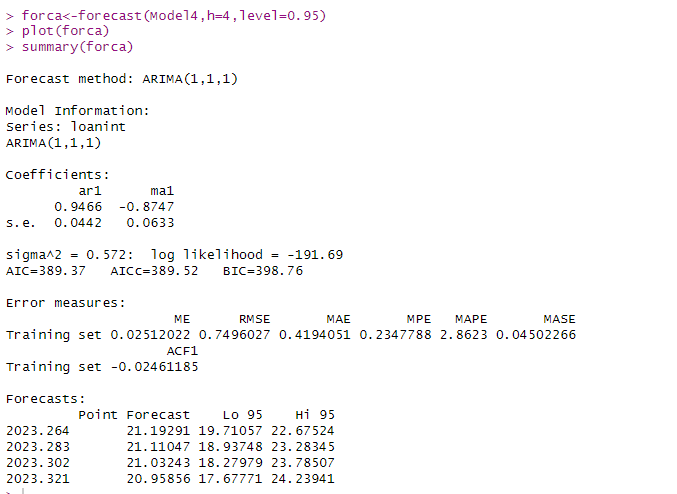
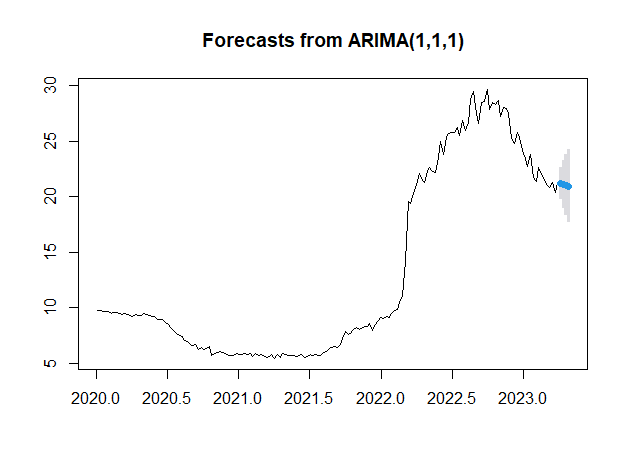
Forecasting for 4 weeks


Neural Network Model

Implementation Process and Execution

Below are the imported libraries and packages needed for building the time series model.

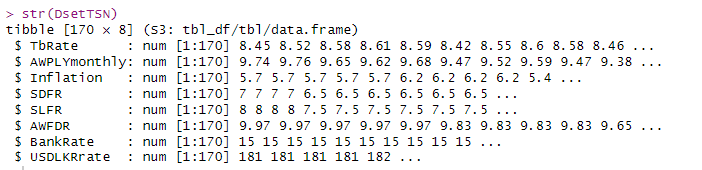
Structure of the dataset

For the training and testing of our dataset, we decided to train 75% of the data and test the remaining 25%.

To normalize our data, we needed to do data scaling which is a pre-processing step recommended when working on deep learning algorithms. The data in the training set was scaled for simplification purposes.

We have to get a train & test set from the transformed data series. 


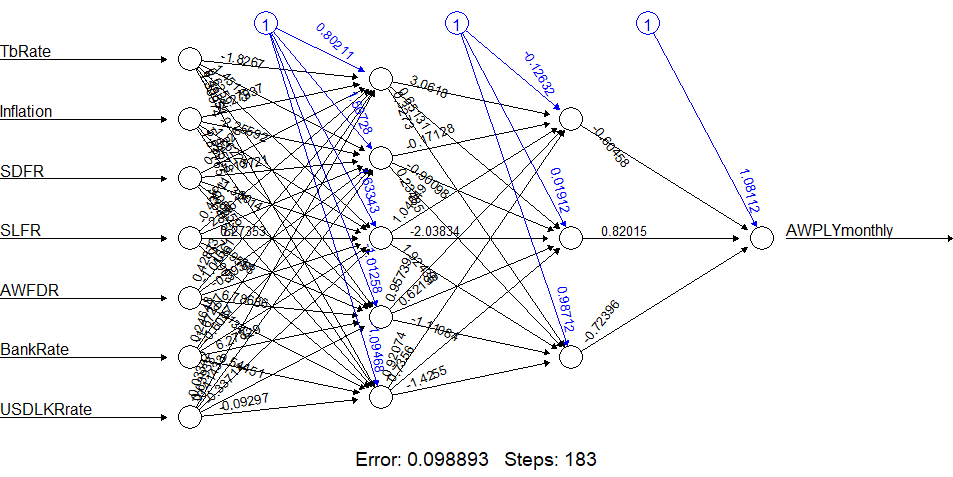
Fitting the ANN model to the training set


>nn <- neuralnet(f,data=train_,hidden=c(5,3),linear.output=T)

> plot(nn)


Calculating the mean squared error of the ANN in the test set.


Mean squared error consists of actual values minus predicted values & getting the summation of those values and dividing it by several observations. For that, we need predicted values and actual values as well


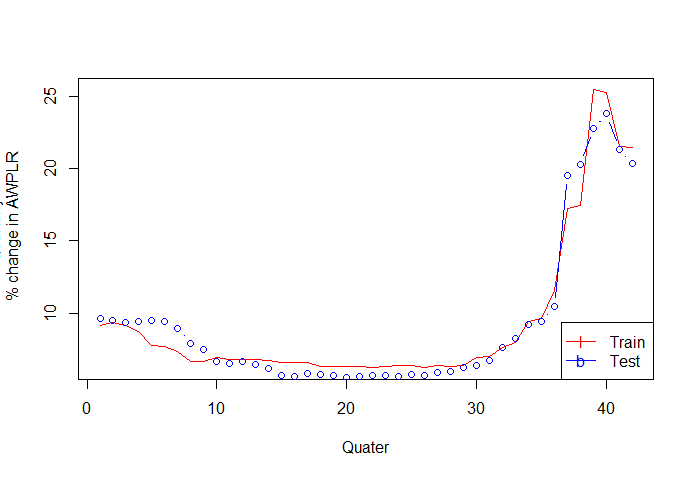
Comparing the fitted values of Train & Test sets. 


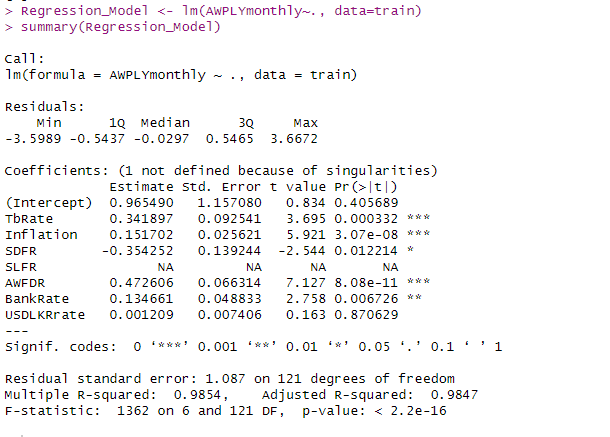
Fitting a regression model for the same scenario


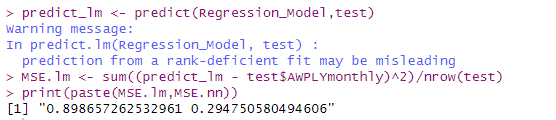
comparing the two errors in the test set

The neural network model has reported a lower MSE than the linear regression model.

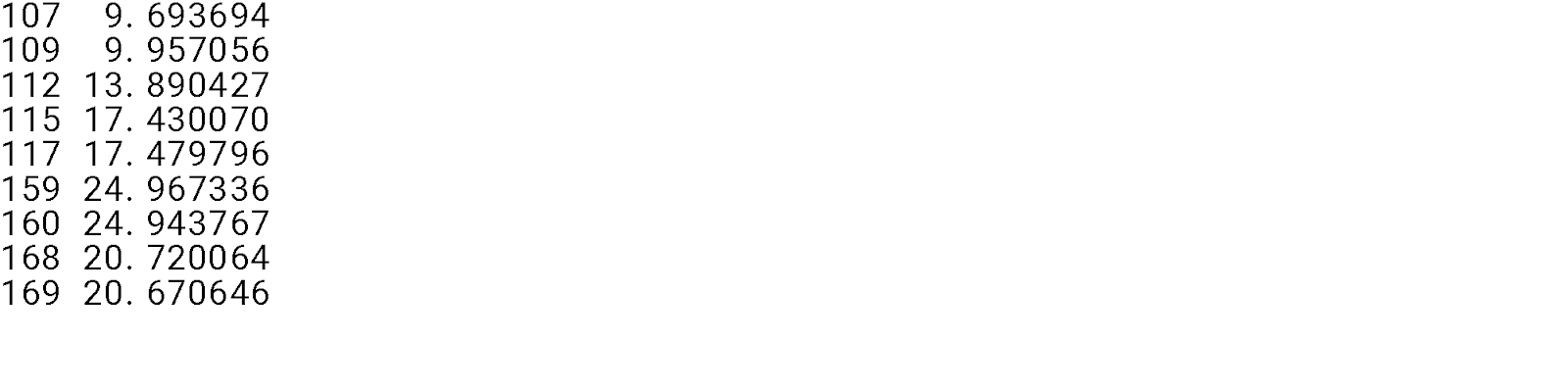
Given below are some of the selected forecasted values. 169 represents the AWPLR as of 26th May 2023 or rate as of the 169th week.


Conclusions 

Out of the two models used it shows that Neural network models give more accurate predictions mainly because more independent variables have been used in contrast to the use of only one variable in time series analysis. The stability of the neural network results with different network parameters should be investigated further and should examine other factors, which influence the AWPLR other than the variables used.


References 


CBSL (2019). Monetary Policy | Central Bank of Sri Lanka. [online] Cbsl.gov.lk. Available at: https://www.cbsl.gov.lk/en/monetary-policy/about-monetary-policy.


7 Tips for invest wisely


8 steps to close a sale successfully.


  1. Do your homework before you call the customer.

Try to gather more information about the prospective customer and be ready with the best-suited product for him/her.


  1. Call the customer at the right time to get an appointment.

It is advisable not to call too early or late in the day. Eg: Senior citizens prefer to have a small nap in the afternoon & housewives are too busy in the morning.


  1. Be punctual and meet the customer on time.

Punctuality shows your professionalism & commitment. If you are stuck in traffic or at another meeting, call and inform the customer in advance about it.


  1. Gather Information

Don’t jump and explain the features of the product. Try to gather more information about the requirements by asking a few questions.

 “May I ask you a few questions about your current needs? This will help me understand your requirements better so that I can recommend the right product to you.


  1. Make recommendations.

Listen to the customer carefully and note down the important points to show them your professionalism. After you understand his needs, recommend a suitable product, that caters to his, needs better.


  1. Clear the doubts & misunderstandings.


If a customer still has some doubts or a misunderstanding, clear them with suitable facts. 


  1. Gain the commitment.

When a customer shows interest be quick to take the next step. Help the customer to act by explaining how he could buy the product by making an advance payment or filling out the applications.


  1. Do not forget to thank the customer for doing business with you.

“Thank you, I’m sure our value-added product/service will be able to meet all your needs”.